DEWALT batteries explained: amp-hours, watt-hours, POWERSTACK and FLEXVOLT
The battery decides how long a tool runs, how heavy it feels and, for demanding tools, how hard it can work. Here is how to read the numbers on a DEWALT pack.
Amp-hours (Ah): capacity at a given voltage
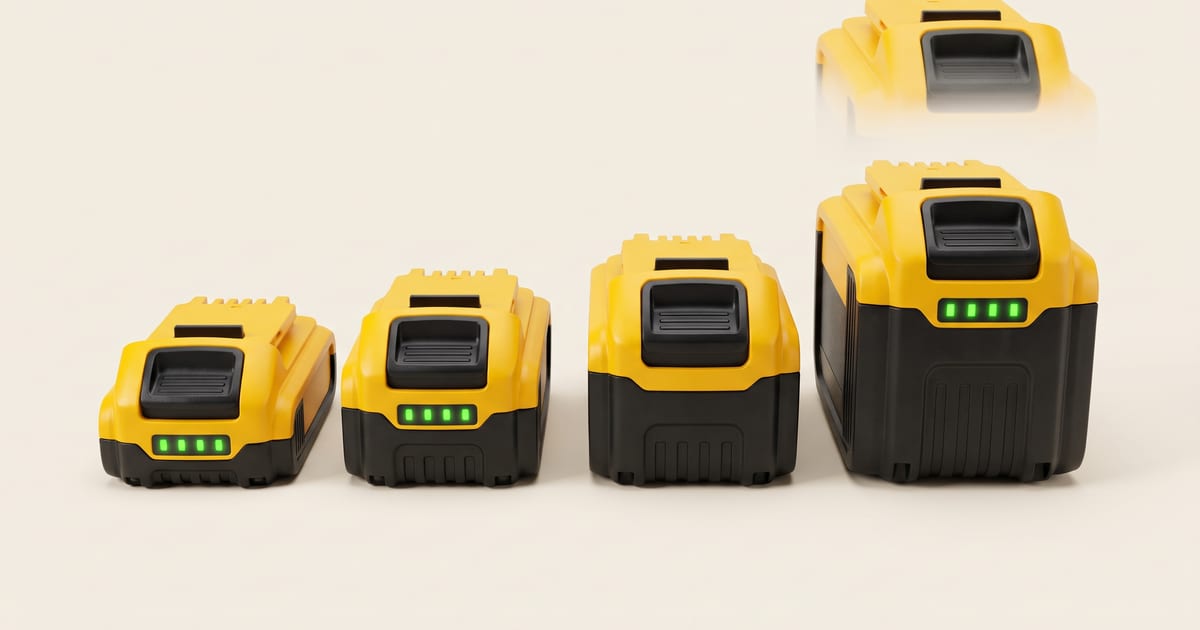
Amp-hours measure how much charge a battery holds. On the same platform, a 4Ah pack runs roughly twice as long as a 2Ah pack. The trade-off is size and weight: bigger packs hold more cells and make the tool heavier and longer.
- Compact packs (around 1.5–2Ah): light and short. Best for drills and impact drivers used overhead or in tight spaces.
- Mid packs (4–5Ah): the everyday sweet spot for saws, grinders and full-day work.
- Large packs (6Ah and up): for high-draw tools such as circular saws, grinders and outdoor equipment.
Watt-hours (Wh): the fair comparison
Ah only compares packs of the same voltage. Watt-hours = volts × amp-hours is the true energy content, and it's how you compare across platforms. For example, a FLEXVOLT pack labelled for 60V MAX use has a lower Ah figure at 60V than at 20V, but holds the same energy either way.
POWERSTACK
POWERSTACK packs use stacked pouch cells instead of cylindrical cells. DEWALT positions them as more compact and more powerful than a similar-capacity cylindrical pack. They're a good fit for drills and drivers where size and weight matter.
FLEXVOLT
FLEXVOLT batteries work in both 20V MAX tools (18V XR in the UK and EU) and 60V MAX (54V XR) tools, switching voltage automatically. They cost more and weigh more. They make sense if you run, or plan to run, the high-power 60V tools, or you want one large pack that fits everything.
Choosing packs for a kit
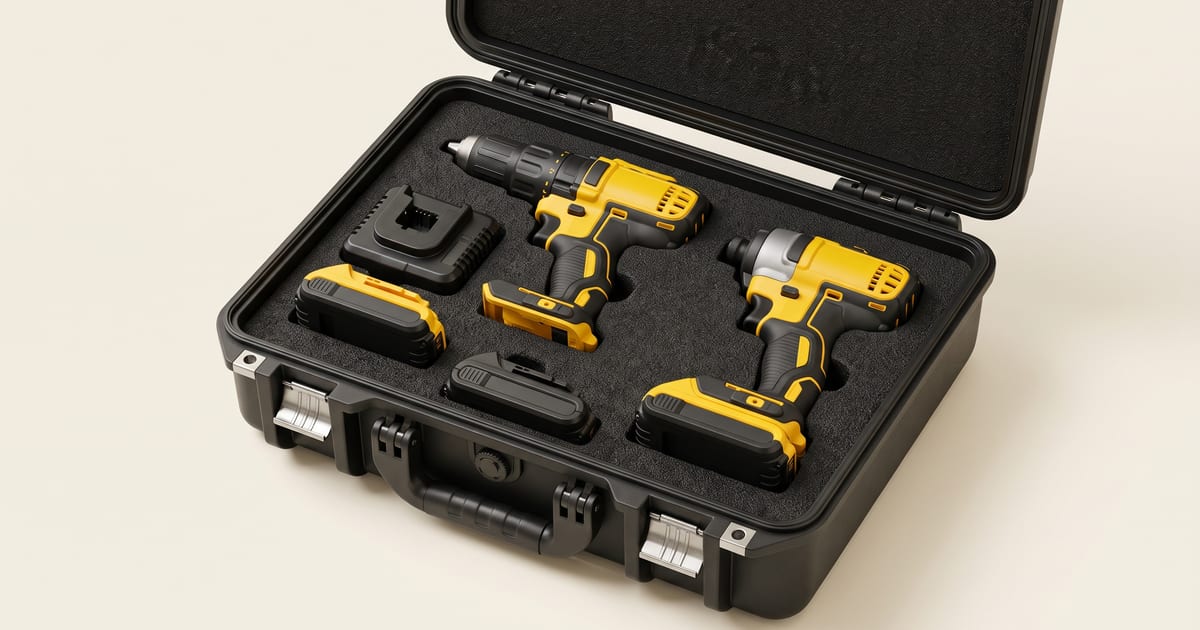
If a kit comes with two small packs, it's usually built for drills and drivers. If you plan to add a circular saw or grinder, budget for at least one larger pack. Our battery comparison lets you weigh runtime against weight and price for every current pack in your region.